
Diabetic Eye Care
Diabetes is one of the leading causes of vision loss in American adults — but with regular eye care, most diabetes-related vision problems are preventable. At Murphy-Watson-Burr Eye Center, our board-certified ophthalmologists and optometrists provide comprehensive diabetic eye care for patients across St. Joseph, Cameron, and Northwest Missouri, helping you protect your sight at every stage of diabetes.
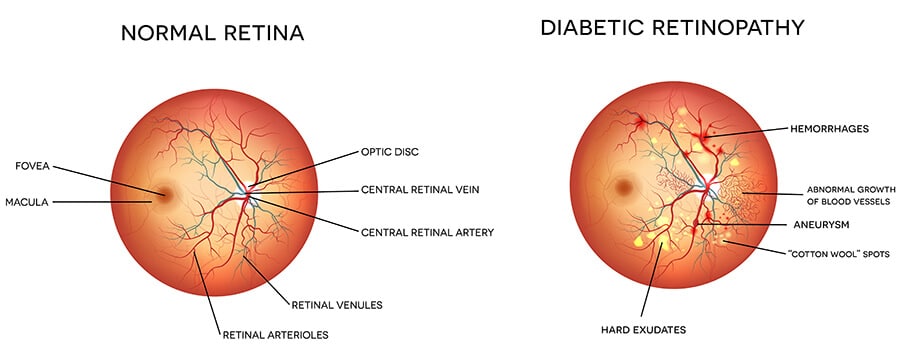
How diabetes affects your eyes
Over time, high blood sugar can damage the tiny blood vessels in the retina — the light-sensitive tissue at the back of your eye. This damage, called diabetic retinopathy, can cause those vessels to leak, swell, or close off, and in advanced stages the eye may grow fragile new blood vessels that bleed. Diabetes also raises your risk of related conditions, including diabetic macular edema, cataracts, and glaucoma. Because these changes often develop slowly and without pain, many people don’t notice a problem until their vision is already affected — which is exactly why routine exams matter so much.
Why a yearly diabetic eye exam matters
The single most important thing you can do for your eyes is to have a dilated diabetic eye exam every year — or more often if your eye doctor recommends it. Dilation lets your provider see the retina directly and catch early changes long before you’d ever notice them. Caught early, diabetic retinopathy is highly manageable; caught late, it’s a leading cause of preventable blindness. Major eye-health organizations recommend a yearly dilated exam for everyone with type 1 or type 2 diabetes, with closer monitoring during pregnancy or when retinopathy is already present.
What to expect at your visit
At Murphy-Watson-Burr, a diabetic eye exam typically includes a check of your vision and eye pressure and a careful, dilated evaluation of your retina and optic nerve — often supported by retinal photography and OCT (optical coherence tomography) imaging that document the health of your retina and help us detect even subtle changes from one visit to the next. Your provider looks for any signs of leakage, swelling, or new blood-vessel growth and compares the findings to your previous exams. We explain what we see in plain language and, when it’s helpful, coordinate with your primary care provider or endocrinologist so your eye health and diabetes care stay aligned.
Treatment and ongoing management
If we find diabetic retinopathy or related changes, your care is tailored to the stage. Early or mild changes are typically managed with closer monitoring and tighter blood-sugar control. For more advanced disease, we coordinate your care with trusted retina specialists so you receive timely, specialized treatment — while we stay involved in your ongoing eye care. Whatever the path, our team walks you through it so you understand each step.
Protecting your vision
You have more control than you might think. Keeping your blood sugar, blood pressure, and cholesterol in your target ranges, staying active, avoiding smoking, and keeping your annual eye exam all dramatically lower your risk of vision loss from diabetes. Think of your yearly exam as a safeguard — one short visit that can help protect a lifetime of sight.
Schedule your diabetic eye exam
Whether you’ve just been diagnosed or have managed diabetes for years, our St. Joseph and Cameron teams are here to help you protect your vision. To schedule your diabetic eye exam, call our office — (816) 233-2020 (St. Joseph) or (816) 632-3501 (Cameron). Meet our doctors.
Frequently asked questions
How often should someone with diabetes have an eye exam?
At least once a year, and more often if you already have retinopathy or your eye doctor recommends it.
Will my eyes be dilated?
Usually, yes — dilation lets us examine the full retina, which is essential for a diabetic eye exam. Plan for some light sensitivity and blurry near vision for a few hours afterward, and consider bringing sunglasses or a driver.
I don’t have any vision problems. Do I still need an exam?
Yes. Diabetic retinopathy often causes no symptoms in its early, most treatable stages, so a yearly exam is your best protection.
Do you coordinate with my regular doctor?
Yes — we’re glad to share findings with your primary care provider or endocrinologist.


